Trusted by top B2B brands

By reading this guide, you’ll learn how to:

  • Diagnose whether your growth challenge is a coverage gap (not enough stakeholders engaged) or a velocity gap (too few meetings progressing).
  • Apply a simple decision framework to know when to pursue more meetings and when to tighten qualification standards.
  • Use three high-impact metrics (booked-to-held show rate, meeting-to-opportunity conversion, and stakeholder coverage per account) to keep activity tied to revenue outcomes.
  • Run a two-cycle test plan (+20% meetings vs. +20% qualified meetings) and know which lever accelerates revenue in your environment.

Introduction:

Enterprise growth doesn’t stall because teams stop booking meetings. It stalls because leaders can’t see clearly whether the problem is too little coverage across buying committees or too little velocity through the pipeline.

The distinction matters. A push for “more meetings” when velocity is the real issue only clogs the pipeline with noise. Tightening qualification when coverage is thin leaves you invisible to critical stakeholders. Both mistakes cost time, credibility, and revenue.

This guide is built for leaders who need to make that call with confidence. You’ll find a decision framework that moves the question beyond activity metrics and into revenue impact. You’ll see which data points reveal the real pipeline gap, and how to test your way to an answer in just two cycles.

The goal isn’t to pick one lever and stick with it. The goal is to know when to widen the net, when to sharpen the filter, and how to keep every meeting tied to outcomes that matter in the boardroom.


Coverage vs. Velocity: A Decision Guide For Enterprise Growth Leaders.

Choosing Volume or Precision in the Enterprise Pipeline 

Revenue has slowed. Your dashboard shows plenty of “activity,” but weighted pipeline is not moving the way it should. Someone says, “we just need to book more prospect meetings.” Heads nod—because activity can be mistaken for progress. Calendars fill, reps scramble, and the weekly standup is full of updates. But in B2B enterprise sales, with six to 10 month sales cycles, six to 10 voices in every deal, and $250,000-plus annual contract values (ACVs), volume can look like progress while quietly burning executive capacity and budget.

The better question is not “do we want more or better meetings?” It is: “Which meetings this quarter reliably become advance buyers and convert to revenue?”

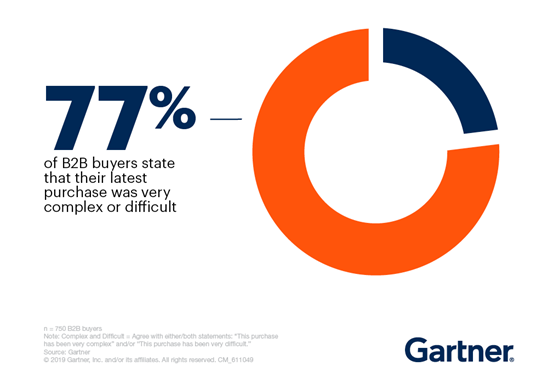
Two facts frame the stakes. First, most enterprise buying is genuinely hard. Gartner research shows that 77% of B2B customers rated their last purchase as “extremely complex or difficult,” with large buying groups who each consult multiple sources. If your meeting strategy does not help those people build consensus, you risk burning seller time without moving velocity.

Source: Gartner


Second, even when someone raises a hand, orchestration and speed decide whether interest becomes a booked and held meeting. A widely cited Harvard Business Review audit found the average response time to web-generated inquiries was 42 hours among companies that replied within 30 days. In digital time, that is a lifetime.

This guide does not take sides; it provides an executive framework to decide when to push for more meetings and when to insist on more qualified meetings. The goal, in either case, is to increase pipeline velocity and get to revenue faster. We will use a handful of durable benchmarks to ground the narrative and show you exactly where to ask better questions in your next leadership session.

What “more meetings” really buys you (and what it costs)

When you open the top of the funnel, you gain volume but also buy learning time. You discover which messages spark interest. You surface latent projects that would have otherwise stayed quiet. Perhaps you even widen brand reach into personas you did not expect to engage.

Early in a market or segment, that exploration is valuable at the leadership level. It will help find language that resonates, channels that respond, and stakeholders who hold actual power but do not fill out forms.

However, there is a bill for pure volume. If meetings are not with the right accounts and right stakeholders, you will see overstuffed calendars, declining follow-up quality, and weak meeting-to-opportunity conversion. For executives, this looks like sellers chasing motion instead of velocity.

The underlying math explains why. Large-sample funnel analysis published by Salesforce (based on Implisit data) shows about 13% of leads convert to opportunities, and only 6% of opportunities convert to deals. The Salesforce data shows 84 days on average from lead to opportunity and 18 days from opportunity to deal. Replace “lead” with “first meeting,” and you still feel the gravity. If meetings are not well-qualified and orchestrated, most will not progress.


Source: Salesforce


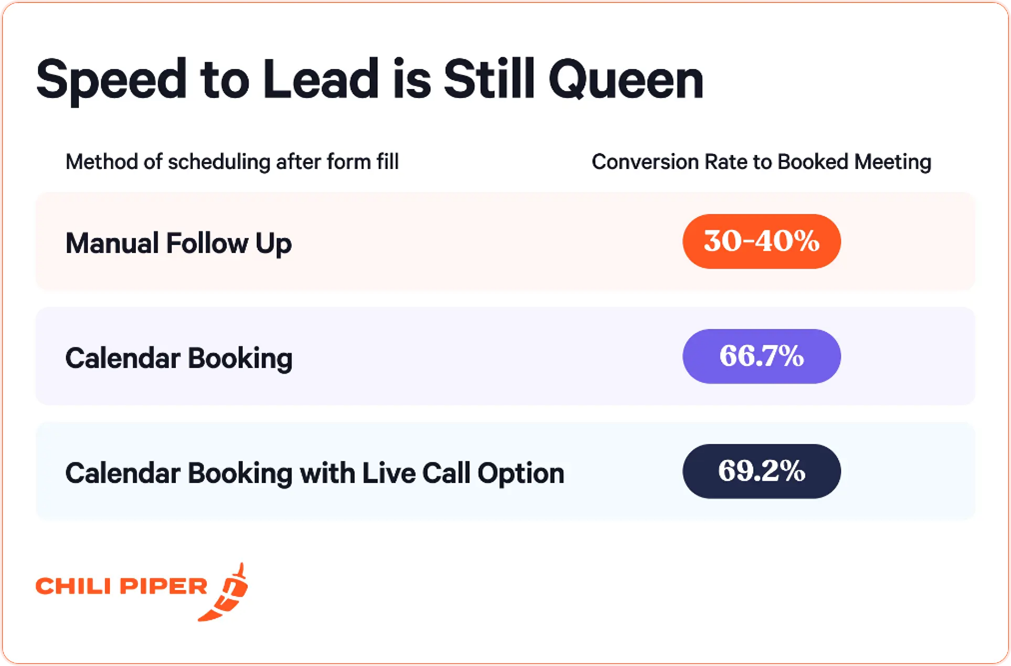
There is also the practical question of getting to the meeting in the first place. Chili Piper’s 2025 benchmark report across millions of submissions found that form-fill to booked meeting conversion averages in the low-to-mid 30% range with manual follow-up, but rises to an average 66.7% when you use instant routing and scheduling—and about 69.2% when a live-call option is added at the moment of conversion.

Orchestration and speed do not just feel better. They significantly increase booked meetings from the same demand. For leaders, this means protecting seller bandwidth and lifting conversion without new spend.

Source: Chili Piper


So, more is a valid lever, especially to map a new segment or to rebuild momentum after a lull. But more only works if you defend two guardrails: speed-to-meeting and seller focus. If you do not, you’re only buying noise.

Executive signals that you are over-indexed on volume:

  • Aged requests: inbound forms sit more than a few hours before contact; the team is playing calendar Tetris instead of triaging by fit.

  • Show rate variability: booked meetings do not consistently hold because people were rushed onto the calendar without context or the right attendees.

  • Meeting-to-opportunity drag: stage creation lags despite full schedules; opportunity quality comments from managers trend negative.

  • Capacity crunch: sales development representative (SDR) teams spend time disqualifying rather than advancing. Senior sellers spend back-to-back hours in conversations that fail to move committees forward.


Why “more qualified meetings” pays off (and where it stalls)

Qualified meetings check three boxes: the account fits your ideal customer profile (ICP), there is a real problem to solve, and at least one influencer feels urgency. When those conditions are met, cycles shorten and win rates rise. It’s because they align with enterprise reality. This is because they reflect enterprise buying reality. You are not convincing an individual; you are organizing a committee.

They also slot cleanly into account-based motions that your sellers already run. With qualified meetings, you see cleaner handoffs, clearer next steps, and more reliable forecast hygiene. For executives, this means forecasts that hold up under board scrutiny.

However, two traps slow teams down:

Trap one: Over-precision. It is possible to overfit to a narrow ICP or a single persona inside a complex account. When you do, you miss adjacent demand and secondary stakeholders. Functions like Information Security, Finance, Legal, and Operations often unlock or block deals later. Over-precision often looks like high initial acceptance but slow or no progression once procurement and risk review begin.

Trap two: Data and process friction. “Qualified” falls apart when systems do not agree. If intent data, website behavior, past engagement, and customer relationship management (CRM) records are not properly aligned, you get false positives and false negatives. When definitions differ across marketing, SDRs, and account executives, routing breaks and service-level agreements (SLAs) slip.

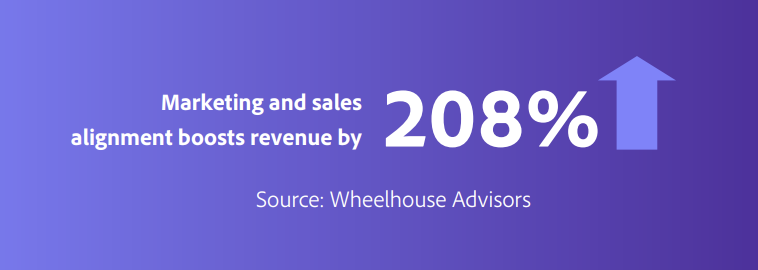
Alignment is not a soft concept: Adobe and Marketo report that alignment boosts revenue impact by 208%. The same investment produces greater revenue because handoffs and definitions are shared.


Source: Adobe Business


The executive takeaway: qualification is a compounding asset—but only when go-to-market teams share definitions, protect speed, and measure progression the same way. It’s one of the reasons Televerde operationalizes this by embedding alignment into account coverage, committee orchestration, and agreed upon SLAs across marketing and sales.


The enterprise reality: you are not scheduling a chat; you are advancing a committee

Enterprise meetings are not individual persuasion moments. They are necessary points in a consensus-building process that spans multiple functions and weeks.

Gartner’s research describes the modern reality: buying teams commonly include six to 10 stakeholders, each consulting multiple sources and bringing their own incentives, constraints, and risks to the table.

Your meeting strategy must reduce that complexity by advancing the next internal conversation. Buyers need help with diagnosis, meeting requirements, validation, and building consensus. None of these are achieved through a simple demo.

So, what does that mean day to day?

  • A “good” discovery with a single champion is not enough. You also need a security review narrative ready, a finance-ready value model, and executive-language proof points.

  • Your held meeting metric should include who attended, not just whether it happened. A discovery with a user, plus someone who signs off on risk, is a different signal than a solo demo with an evaluator.

  • Messaging must change across the committee. The director of IT cares about time to integrate. Finance wants cost-to-value clarity. An executive sponsor wants risk reduction and business outcome credibility.


The supplier that wins is the one who makes the next stakeholder conversation easier. With our enterprise customers who have full buying committees, we focus on orchestrating the committee so each meeting advances—not just fills—a calendar.

The executive framework

Think of two dials: more meetings and more qualified meetings. The metric that helps you decide which dial to turn, and when, is sales velocity.

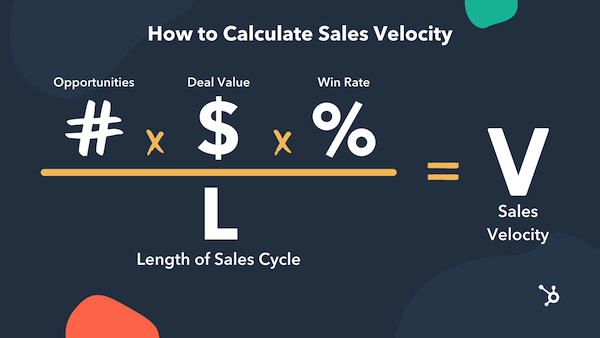
The sales velocity formula is simple: Velocity = number of opportunities × average deal value × win rate ÷ sales cycle length.

Source: HubSpot Blog


Start with these four questions that will help separate signal from noise:

  1. Velocity trend: Is dollars-per-day velocity rising or falling? Which input is dragging? Opportunity count, win rate, deal size, or cycle length? In this conversation, data > opinions. Pull the data and do the math.

  2. Stakeholder coverage: Per live deal, how many decision-makers are engaged compared with the typical six to 10 for enterprise purchases? If deals stall at evaluation or procurement, you likely have a coverage problem, not a calendar problem.

  3. Conversion cliffs: Where is the drop? Booked to held meetings (show rate)? Held meetings to opportunity (stage creation)? Opportunity to win?

    Booking benchmarks, your own show rate, and your opportunity-creation data will tell you whether the top of funnel or the middle is leaking.

  4. Readiness signals: Do first-party behaviors and third-party intent suggest accounts are in-market now, or are you early and need to seed demand with education and problem-framing content?


Then set the bias by scenario:

  • New market or segment: Bias more meetings for one to two cycles. Map personas, language, and unanticipated objections quickly. Lock in what you learned, tighten thresholds, and move to qualified.

  • New product into existing accounts: Bias more qualified meetings. You are selling change to known buyers; fit, timing, and relationship matter more than sheer volume.

  • Pipeline stagnation with low win rates: Bias qualified first. Lift win rate and shorten cycles through better multi-threading and business-case narratives. If opportunity count remains thin, add a controlled volume layer.

  • Seasonal or board-driven gap: Use targeted volume sprints to cover more surface area in the market, but defend your SLAs and exit criteria so velocity does not degrade next quarter.


To make this real, build a one-page decision matrix for your leadership team that shows each scenario, the recommended bias, and one “watch out” (for example, “volume sprint, but do not exceed SDR capacity” or “precision push, but avoid ICP myopia”). This is a conversation Televerde facilitates directly, ensuring all are aligned on which lever will accelerate revenue now.

Tools you can apply right away

Here is a practical kit you can put to use in five business days.

  1. Run a 60-minute velocity review
    Export the last 90 days by segment. Calculate sales velocity for each and attribute drag to one of the four inputs. If velocity is down because opportunity count is low while win rate and cycle time are healthy, you likely need more meetings.

    If velocity is down because win rate is soft or cycles are long, you likely need more qualified meetings with better buying committee coverage. Make the call for the next six to eight weeks and write it down. Source: HubSpot Blog

  2. Fix the moments before the meeting
    Measure form-fill to booked meeting conversion on inbound. If you are at 30% to 40% with manual follow-up, move to instant routing and scheduling and target about 66% or higher, based on Chili Piper’s aggregated benchmark. Consider adding a live-call option to push toward about 69%. This is “free lift” because you are turning existing demand into more meetings.

    Audit speed-to-meeting on hand-raisers. Engineer minutes, not hours. That likely means a service-level agreement on first touch and ring-fencing SDR time for immediate follow-up.

  3. Protect the hour you have earned
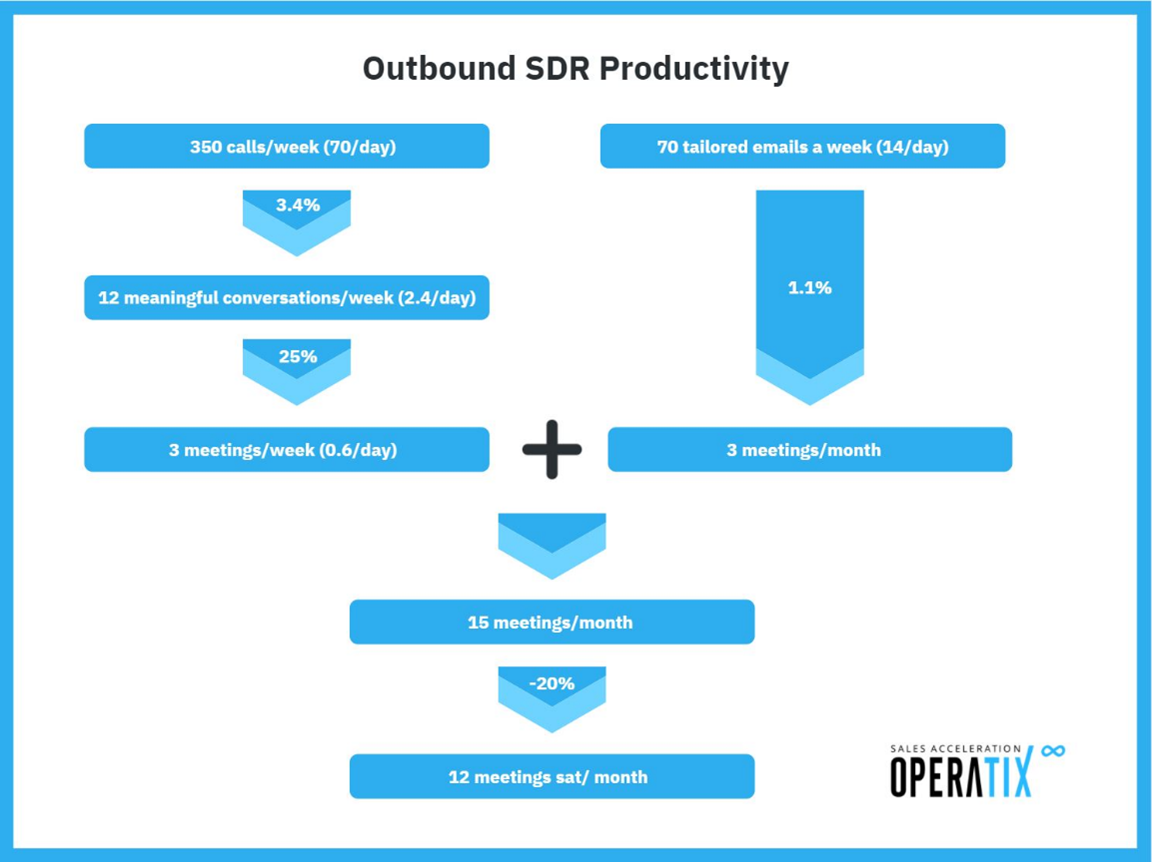
    Model show rate and plan capacity accordingly. Crunchbase’s SDR analysis provides a simple baseline: about 20% dropout from booked to held (80% show), 15 meetings per SDR per month on average, and 1 in 2 sales-accepted leads (SALs) that is, meetings—progress to a “next step” such as a demo, proof of concept, proposal, opportunity, or sale. Compare your rates to these and decide if the problem is before or after the meeting.

  1. Track the right progression metric
    Make meeting-to-opportunity an executive KPI. It is the cleanest gauge of meeting quality and orchestration. If this number is low, do not reflexively ask for “more meetings.” Fix committee coverage, qualification questions, and next-step assets. If the metric is healthy but opportunity-to-win is weak, the problem is late-stage proof or risk mitigation rather than quantity.

  2. Clarify definitions and SLAs in one page
    Define “qualified meeting” at the leadership level. Who must attend? What buying job must be advanced? What is the time-to-first-touch and time-to-first-meeting? When sales and marketing are aligned on definitions and timing, the same spend produces more revenue and less friction. Televerde clarifies this at the beginning to prevent marketing and sales from using different definitions of “qualified.”

  3. Run two controlled experiments
  • +20% meetings in one channel for two cycles, with strict exit criteria and protected follow-up.

  • +20% qualified-meeting rate in a matched segment by tightening score thresholds, adding intent triggers, or requiring multi-persona attendance.Compare velocity, not just meeting counts, after those two cycles.
  1. Create an “executive scoreboard”
    Four tiles, updated weekly: form-to-booked, booked-to-held, meeting-to-opportunity, and sales velocity.

    Add one line item for stakeholder coverage per live deal. Those five views will keep the leadership conversation focused on outcomes instead of vanity metrics. This surfaces velocity signals for the C-suite without drowning in funnel metrics.

The balanced path forward

This is not a binary; it is sequencing with operational rigor.

  • Early stage or new territory: Focus on more meetings to find signal quickly. Within two cycles, lock in what you have learned: which personas attend and progress, which messages resonate, and which objections repeat. Then narrow. Shift your gating and routing so you can protect sellers’ time and climb the meeting-to-opportunity curve.

  • Mature markets or stalled pipeline: Prioritize more qualified meetings to lift win rate and shorten cycle time. You will need a plan for security review, a finance-ready value model, and executive storylines that reduce perceived risk.

  • Always-on alignment: Keep sales and marketing on the same page about definitions, routing, and SLAs. Telemetry should capture who attended and what job the meeting advanced. Organizations that align in this way see far more revenue from the same marketing spend.

How Televerde can help:

  • Orchestrate the committee: We map, sequence, and engage all stakeholders so each meeting advances the next internal conversation, not just a demo. This is how you address Gartner’s “complex buying” reality without slowing down.

  • Operationalize qualification: We implement instant routing, strict definitions, and SLAs so qualified intent becomes booked and held meetings, while reducing friction at the handoff.

  • Tune the dials quarterly: We run velocity reviews and scenario models with your team, then rebalance more vs. more qualified based on the lever that will move revenue now.

Solve for outcomes, not calendar math

“Book more meetings” is an understandable reflex. It feels active, and at moments it is exactly the right move. But executive focus means choosing the right meeting mix for this quarter, proving it in velocity, and sequencing as conditions change.

When you do, calendars stop being busywork and start being leading indicators you control. Your team learns faster in early markets. Your sellers advance committees more effectively in mature ones. And your board sees a pipeline that moves, not just one that swells.


Column Image
Broadcom Case Study
See how Broadcom partnered with Televerde to turn 6,000+ qualified meetings into $171M in pipeline — driving $87M+ in revenue and 12x ROI in year one.
Column Image
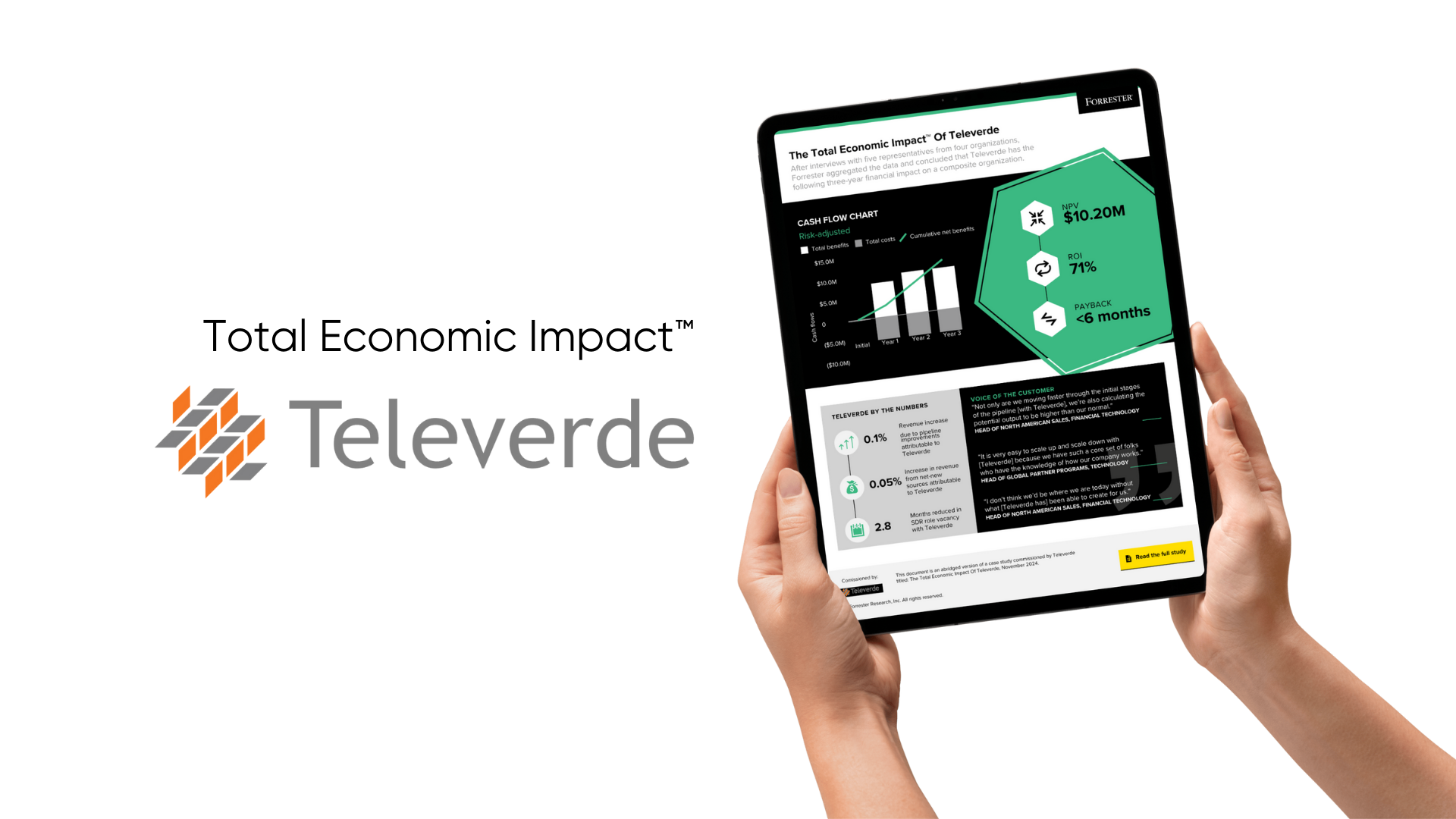
Total Economic Impact™
Forrester’s TEI study shows Televerde delivers a 71% return on investment with clients realizing a $10.2M net present value (NPV) over three years.
Column Image
Hexagon Case Study
Discover how Hexagon turned top-of-funnel meetings into $63M pipeline ultimately achieving a 6X return on investment and fueling sustainable growth.

Ready to speak with a pipeline strategist?